Summary: This blog explains Custom Development vs Power Apps by comparing speed, budget, performance, and long-term scalability. It helps businesses understand when low-code solutions work best and when custom development delivers greater value.
Businesses today are under constant pressure to build digital solutions faster while keeping costs under control. Whether it’s automating internal workflows, building dashboards, or creating scalable applications, the real challenge lies in choosing the right development approach.
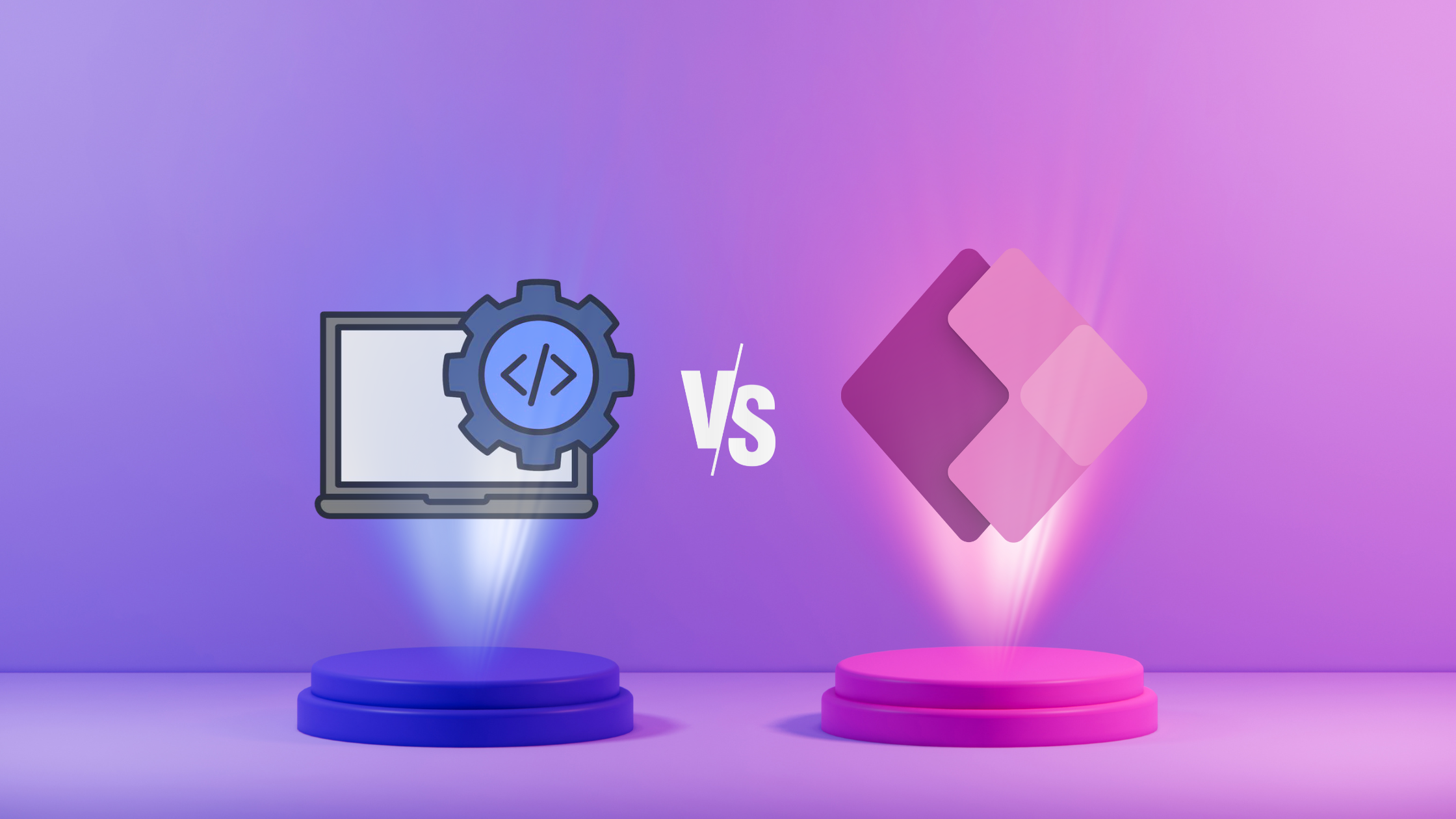
This is where the debate around Custom Development vs Power Apps becomes critical. While Power Apps promises speed and simplicity through low-code development, custom development offers flexibility, performance, and long-term scalability. Choosing the wrong option can lead to wasted budget, limited growth, and the need to rebuild solutions later.
In this blog, we explore Custom Development vs Power Apps through a practical comparison of time, cost, efficiency, scalability, and business impact, helping you make a smarter, future-ready decision.
Understanding the Two Approaches
Before comparing them, it’s important to clearly understand what each option delivers.
What Is Power Apps?
Power Apps is Microsoft’s low-code platform that allows users to build applications using pre-built components and minimal coding. It integrates well with tools like Microsoft 365, SharePoint, Teams, Excel, and Azure.
Power Apps is commonly used for:
- Internal process automation
- Approval workflows
- Simple data entry applications
- Department-level tools
What Is Custom Development?
Custom development involves building software from the ground up using programming frameworks, databases, and architectures tailored to business-specific needs. This approach gives complete control over functionality, performance, and future expansion.
Custom development is ideal for:
- Customer-facing platforms
- Scalable SaaS products
- Complex business logic
- High-performance web or mobile applications
Custom Development vs Power Apps: Time to Build
Power Apps: Faster Delivery
One of the strongest arguments in Custom Development vs Power Apps is speed. Power Apps enables rapid development because:
- Pre-built templates reduce effort
- Drag-and-drop components simplify UI
- Minimal coding speeds up deployment
Many Power Apps solutions can be launched within days or weeks, making it a strong choice for urgent internal needs.
Custom Development: Time Well Invested
Custom development takes longer due to planning, design, development, and testing phases. However, this time investment ensures:
- Better system architecture
- Cleaner integrations
- Long-term stability
Cost Comparison: Short-Term Savings vs Long-Term Value
Power Apps: Lower Initial Budget
In the Custom Development vs Power Apps cost comparison, Power Apps usually has a lower upfront cost because:
- Development effort is reduced
- Infrastructure is managed by Microsoft
- Faster builds mean lower labor costs
However, licensing fees can increase over time, especially as users and features grow.
Custom Development: Higher Initial Cost, Better ROI
Custom development requires a higher initial investment due to skilled developers and infrastructure setup. But in the long run, it offers:
- No recurring platform licensing
- Better cost control at scale
- Full ownership of the solution
Efficiency and Performance

Power Apps: Efficient for Simple Use Cases
Power Apps works efficiently for lightweight applications such as:
- Forms and approvals
- Internal reporting tools
- Small datasets
Performance limitations appear when applications grow complex or data volume increases.
Custom Development: Performance-Driven
Custom development is optimized for:
- Large user bases
- Heavy data processing
- Advanced workflows
This makes custom-built solutions faster, more stable, and more reliable.
Scalability and Growth Readiness
Scalability is one of the most overlooked aspects in the Custom Development vs Power Apps discussion.
Power Apps: Platform Limitations
Power Apps can scale to a point, but businesses may face:
- Licensing cost increases
- Platform constraints
- Dependency on Microsoft ecosystem
Custom Development: Built for Growth
Custom development allows businesses to:
- Design scalable architectures
- Add features without limitations
- Support future integrations
Customization and Control
Power Apps: Controlled Flexibility
Power Apps offers customization within defined boundaries. This works well for standardized processes but can feel restrictive for unique business workflows.
Custom Development: Full Ownership
With custom development, businesses control:
- Codebase
- Data
- Security policies
- Product roadmap
This level of ownership is essential for strategic digital products.
Security and Compliance
Power Apps: Platform-Level Security
Power Apps benefits from Microsoft’s built-in security, including role-based access and data protection. This suits general compliance needs.
Custom Development: Tailored Security
Custom development enables:
- Industry-specific compliance
- Advanced authentication
- Custom security architecture
When Should You Choose Power Apps?
Power Apps is the right choice when:
- You need a solution quickly
- The application is internal
- Budget is limited
- Requirements are simple
- You already use Microsoft tools
When Is Custom Development the Better Option?
Custom development is ideal when:
- Scalability matters
- Performance is critical
- The app is customer-facing
- You want full ownership
- The solution drives revenue
Conclusion
The decision between Custom Development vs Power Apps is not about choosing the latest trend it’s about aligning technology with business goals. Power Apps is excellent for speed and internal productivity, while custom development delivers scalability, performance, and long-term value.
Understanding this difference helps businesses avoid costly rebuilds and technology limitations in the future.
If you’re evaluating Custom Development vs Power Apps and want clarity on what truly fits your business goals, a technology consultation can help assess your requirements, growth plans, and budget before you invest.