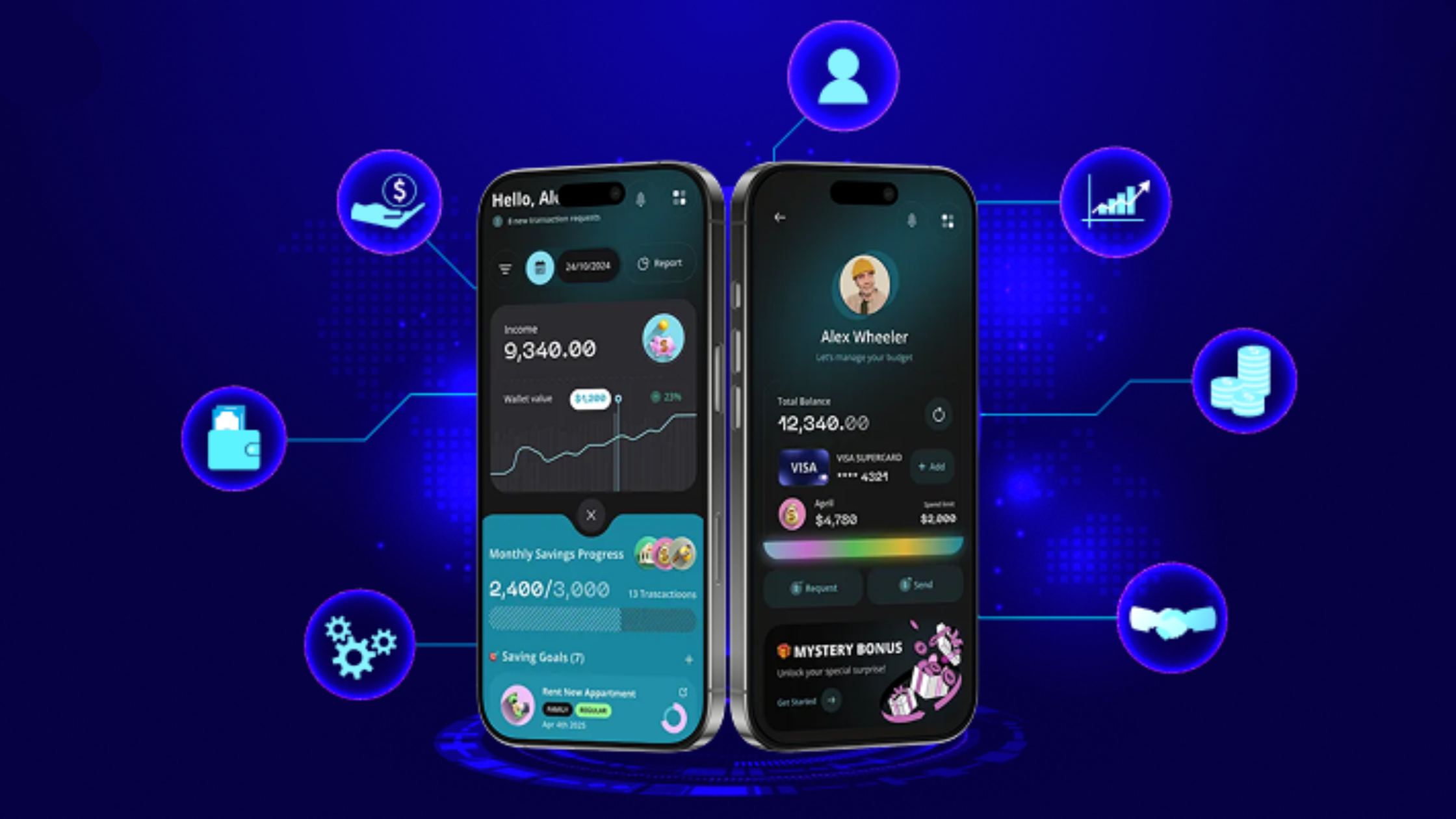
Summary: Fintech apps in 2025 must deliver more than speed and convenience they must meet strict compliance and security standards. This blog explores the most essential compliance-ready features for fintech apps, including KYC/AML automation, secure data management, real-time monitoring, fraud detection, and multi-region regulatory support. It helps product owners build safer, scalable, and regulation-ready fintech platforms.
Ask any user why they trust a fintech brand, and you’ll usually hear three words: security, speed, and safety. But behind those three words lies something far more complex.
In 2025, fintech apps are no longer judged only by how seamless their UX is or how fast transactions load. Users expect safety as a default, regulators demand strict adherence to rules, and one small compliance gap can cost millions in penalties or cause complete loss of user trust. If you’re building or scaling a fintech product today, compliance is not a box to tick.It’s a core part of product strategy.
Let’s break down the most important features for fintech companies to stay compliant, secure, competitive, and future-ready in 2025.
Why Compliance Matters More Than Ever in Fintech
Before we dive into features, let’s understand the current climate:
- Global fintech fraud has increased by over 50% in the past three years.
- Regulators have introduced stricter data, payment, and privacy laws.
- Cross-border fintech growth demands multi-region compliance.
- Users expect instant onboarding but zero compromises on safety.
This guide covers everything your app needs from KYC and AML automation to multi-region compliance architecture—so your product can grow without regulatory hurdles.
Automated KYC & AML The Compliance Bedrock
Let’s start with the essential. KYC (Know Your Customer) and AML (Anti-Money Laundering) requirements are non-negotiable for fintech apps. But in 2025, customers won’t wait 48 hours for manual verification. They want instant approvals.
Key Features for Compliance:
- Digital ID verification
- Liveness detection
- OCR-based document scanning
- Automated AML watchlist screening
- Politically Exposed Persons (PEP) checks
- Instant background verification
Why it matters:
Modern users expect onboarding to be as easy as ordering food. Automated KYC/AML bridges the gap between fast onboarding and strict compliance.
Transaction Monitoring & Alerts
Regulators expect fintech products to catch suspicious activities the moment they occur—not hours later.
Must-have features:
- AI-driven pattern recognition
- Risk scoring for each transaction
- Behavior analysis based on user history
- Automated alerts for anomalies
- Real-time flagging of suspicious transfers
Impact:
This protects your customers, reduces chargebacks, and ensures compliance with AML directives, FATF recommendations, and region-specific regulations.
Strong Data Encryption & Secure Storage
No matter how good your UX is, if user data isn’t secure, nothing else matters. With rising cyberattacks, fintech apps must provide airtight protection.
Recommended best practices:
- 256-bit AES encryption
- End-to-end hashing
- Tokenization of sensitive data
- HSM-based key management
- Zero-trust architecture
- Encrypted vault-based storage
Supports compliance with:
- GDPR
- PCI-DSS
- CCPA
- RBI / FCA / PRA / MAS guidelines
This is one of the most critical features for fintech that regulators actively monitor.
Consent Management & User Data Transparency
The global privacy narrative is changing.Users now want complete clarity on:
- what data you collect,
- why you collect it,
- who can access it, and
- how they can revoke permission.
Must-have features:
- Consent dashboards
- Downloadable data logs
- Real-time permission revocation
- Clear privacy disclosures
- Granular consent options
Why it matters:
This builds trust and ensures compliance with data privacy laws worldwide.
Automated Audit Trails & Compliance Reporting
Auditors expect complete visibility into operations. Instead of scrambling for reports at the last minute, fintech apps need auto-generated audit logs and export-ready compliance documents.
Key capabilities:
- Timestamped activity logs
- User action history
- IAM-based (Identity & Access Management) logs
- Downloadable audit-ready reports
- SEC / RBI / FCA reporting formats
Benefit: Audits become easier, faster, and fully compliant.
Fraud Detection Powered by AI & Behavioral Analytics

Traditional fraud systems can’t keep up with modern threats. This has led to a massive adoption of AI-first fraud detection systems that can identify unusual patterns long before they become a threat.
Features for fintech in 2025:
- Behavioral biometrics
- Device fingerprinting
- Anomaly detection
- Geo-velocity checks
- Machine learning–based risk scoring
Why this matters:
With AI monitoring, even the most subtle fraud attempts are blocked instantly.
Multi-Region Compliance Architecture
Fintech apps today rarely operate in a single geography.
If your users are global, your compliance must be global too.
Your app must adjust to:
- GDPR (Europe)
- PSD2 & Open Banking (EU/UK)
- CCPA (California, US)
- NYDFS (New York)
- MAS Regulations (Singapore)
- RBI & NPCI Norms (India)
- DIFC / ADGM (UAE)
How to implement:
- Region-based rule engines
- Auto-switching compliance layers
- Country-specific verification flows
A multi-region architecture makes cross-border scaling easier.
Regulatory Sandbox Support
Fintech startups rely heavily on regulatory sandboxes for testing new ideas. Your product should be built to integrate sandbox switching seamlessly.
- Sandbox/production mode toggles
- Modular compliance layers
- Secure test-data environments
- API throttling controls
This allows your team to experiment legally and safely.
Secure API Architecture & Open Banking Compliance
Open banking is now a global reality APIs are the core of modern fintech.
- OAuth 2.0 + OpenID Connect
- API access control
- Permission-based data sharing
- API threat detection
- Rate limiting
- API-level encryption
APIs are one of the biggest attack vectors in fintech. Securing them is critical.
Vendor Risk Management & Third-Party Compliance
Fintech apps depend on:
- payment gateways
- identity verification platforms
- cloud hosting
- analytics solutions
- external banking APIs
But every third-party dependency introduces risk.
Must-have features:
- Vendor authenticity checks
- Continuous compliance auditing
- SOC 2 / ISO 27001 verification
- Third-party API security testing
- Automated vendor risk scoring
This ensures all integrated partners meet global compliance requirements.
Identity & Access Management (IAM) Controls
Who can access what, and under which conditions? IAM determines this with precision.
IAM must include:
- Role-based access control (RBAC)
- Multi-factor authentication (MFA) for admins
- Privileged access logs
- Passwordless login support
- IP/Device-based login restrictions
This is one of the most important features for fintech that prevents internal risks—an area often overlooked.
Compliance-Ready UI/UX Design
Users won’t read long compliance documents. Your UI needs to guide them effortlessly.
UI features that support compliance:
- Clear KYC progress bars
- Error-free upload instructions
- Consent pop-ups
- Transparent data usage icons
- Easy-to-read AML alerts
A clean compliance UI boosts trust and onboarding conversion.
Incident Response & Breach Management System
Regulators expect fintech companies to have a clear breach response plan.
- Real-time breach alerts
- Automated incident tickets
- Emergency data locking
- Communication workflows
- Regulator notification templates
A well-designed incident response system reduces impact and supports compliance.
Blockchain-Based Audit Trails (Optional but Growing)
Many fintech companies are exploring blockchain for transparent audit tracking.
- Tamper-proof logs
- Immutable transaction records
- Clear audit transparency
- Fraud reduction
While optional today, it’s becoming a competitive advantage.
AI-Based Regulatory Compliance Engines
Manual compliance checks are outdated. AI-driven compliance layers can automatically:
- detect suspicious transactions
- maintain updated regulatory rules
- alert teams when new laws arise
- review documentation automatically
This is one of the most futuristic features for fintech entering mainstream adoption in 2025.
Compliance Is Not a Feature It’s the Future of Fintech
If 2020–2023 was the era of convenience and speed, 2025 is the era of security, transparency, and compliance.
Users trust apps that protect their data. Regulators trust apps that follow the rules. Investors trust apps that minimize risk.
To build a future-ready fintech product, your compliance architecture must be:
- Automated
- Scalable
- Multi-region
- AI-ready
- user-centric
Fintech apps that embrace these compliance-ready features will not only meet regulatory expectations, but they’ll win user trust, reduce risk, and accelerate growth in a hyper-competitive market.