The website is quietly reinventing itself. For twenty years, a website worked in one direction. You typed an address, a page loaded, and you did the hunting scrolling, clicking, searching for what you needed. The site just waited.
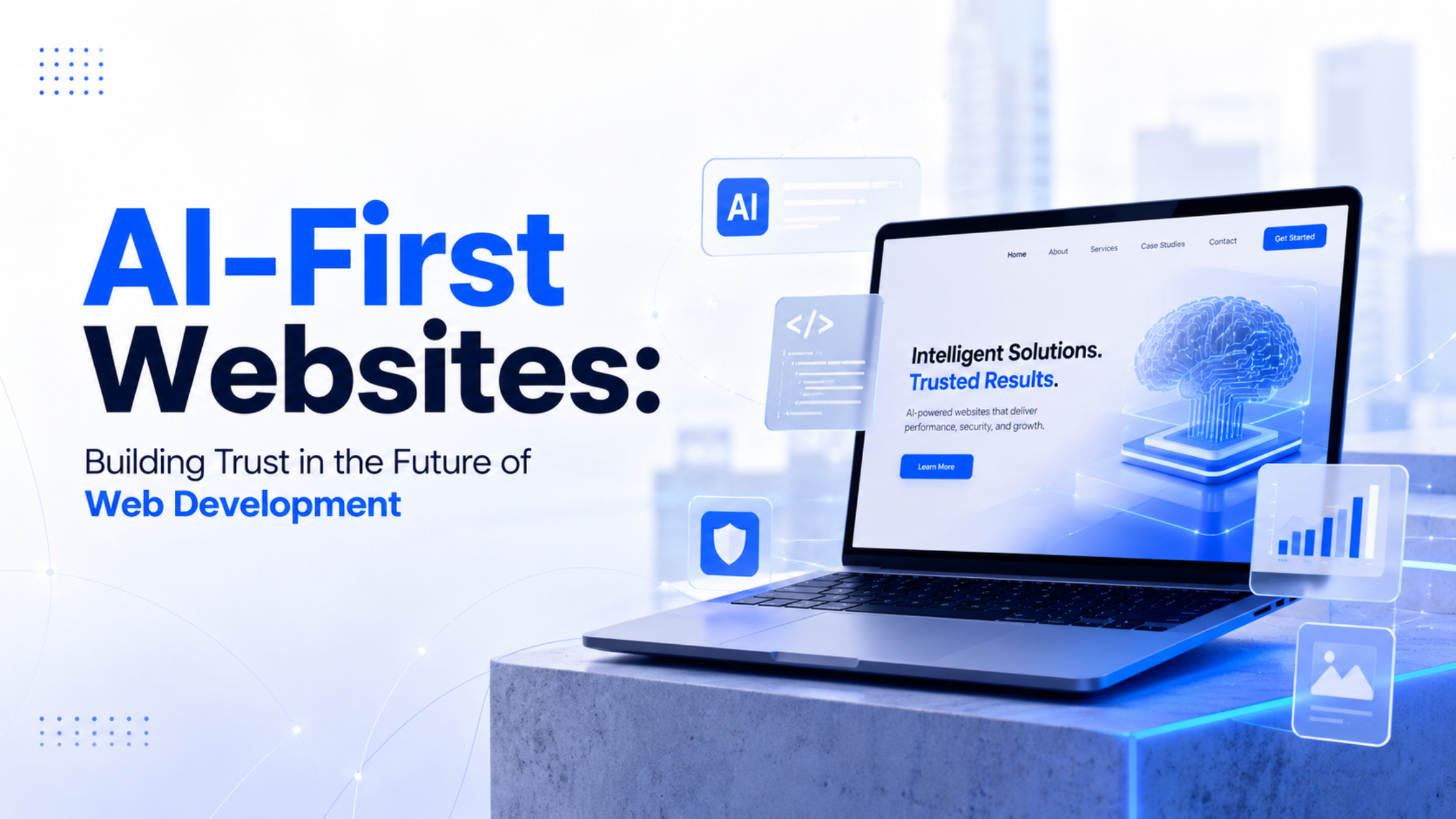
That model is fading. We’re moving into an era of AI-first websites: sites designed from the ground up around intelligence, where the experience adapts to each visitor instead of forcing everyone down the same path. And here’s the twist most people miss — the real prize isn’t speed or flashiness. It’s trust.
Let’s unpack what that means and why it matters for your business.
What “AI-first” actually means
An AI-first site isn’t a normal page with a chatbot bolted onto the corner. It’s a site where intelligence is part of the foundation, not an afterthought.
Think of the difference between a vending machine and a great shop assistant. The vending machine gives everyone the same thing in the same way. The assistant notices what you’re looking for, answers your questions, remembers you next time, and points you to exactly what you need. AI-first websites aim to be that assistant helpful, responsive, and personal at scale.
In practice, these sites can understand a visitor’s intent, answer questions in natural language, surface the most relevant content, and adjust the journey in real time. The technology does the work quietly in the background so the experience feels effortless. There’s no manual, no maze of menus just a site that meets people where they are.
Why trust became the real battleground
Here’s the uncomfortable part. The same AI that can make a site brilliant can also make it feel creepy, generic, or untrustworthy if it’s handled badly. That’s why the conversation around AI and trust has become so important.
When a site personalises well, people feel understood. When it personalises clumsily or hides how it uses data people feel watched. As AI gets more capable, visitors are getting more discerning. They can sense when content is hollow, when a recommendation is manipulative, or when an “assistant” is just a wall between them and a real answer.
So the brands winning with AI-first websites aren’t the ones with the most features. They’re the ones who use AI to be more genuinely helpful and are honest about how it works. In this new era, trust isn’t a nice-to-have. It’s the whole game.
Six ways AI-first websites build trust
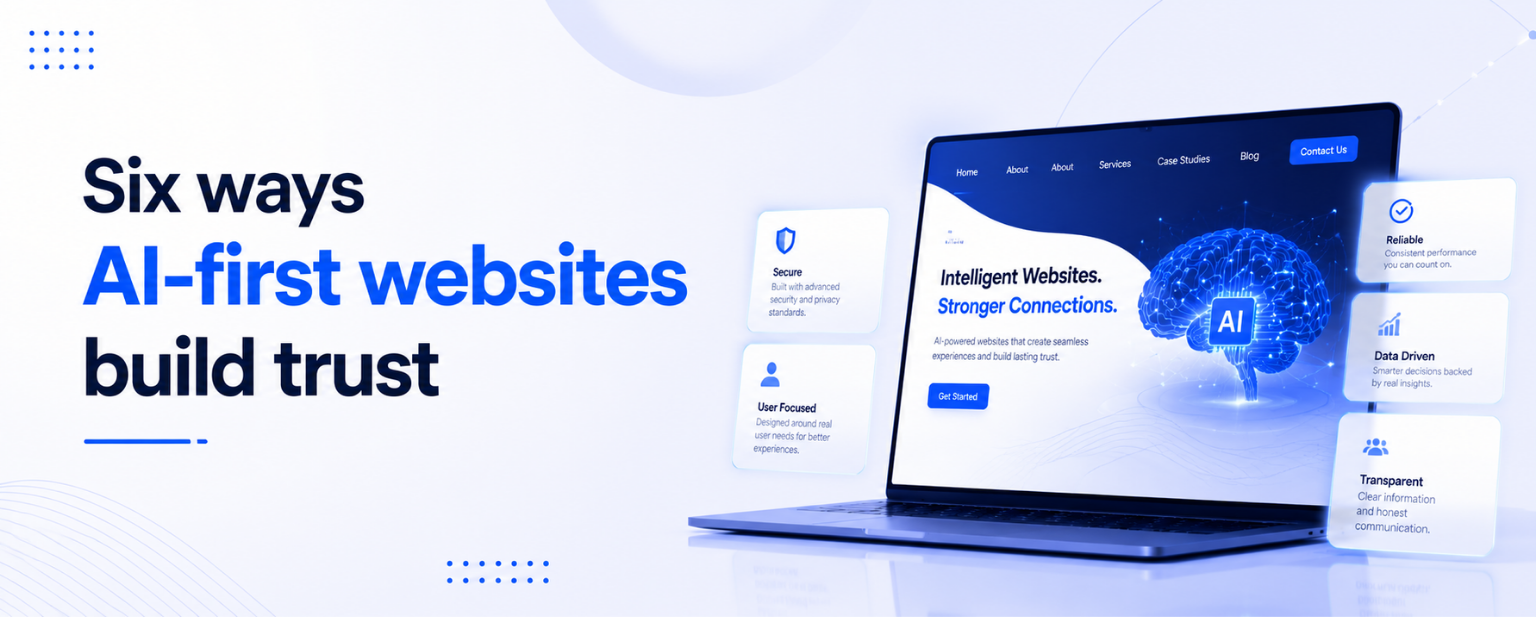
Let’s get practical. Here’s where thoughtful AI web design earns real confidence from visitors.
- Helpful personalisation, not creepy tracking. A good smart site tailors content to what’s useful showing a returning customer relevant next steps while being transparent about data. Helpfulness builds trust; secrecy destroys it.
- Instant, accurate answers. An AI assistant that actually answers questions (and admits when it can’t, then hands off to a human) makes people feel respected. One that dodges and loops does the opposite.
- Speed and reliability. Trust is fragile. A site that’s fast, stable, and always available signals competence. AI that predicts and preloads content keeps the experience smooth, which quietly reassures every visitor.
- Accessibility for everyone. Thoughtful AI web design catches poor contrast, missing labels, and confusing navigation, making the site usable for more people and inclusivity is a powerful, often overlooked trust signal.
- Honest, high-quality content. AI can help produce content faster, but trust comes from accuracy and a human touch. The strongest sites use AI to assist writers, not replace judgement so the information stays reliable.
- Security and privacy by design. When AI monitors for threats and the site is clear about how data is protected, visitors feel safe enough to act. Nothing helps you build trust online like making people feel secure.
The mistake that breaks trust instantly
The fastest way to ruin an otherwise great site? Using AI to do more talking instead of more helping.
A chatbot that won’t let you reach a person. Recommendations that feel like pushy sales. Auto-generated content that’s confidently wrong. These are the moments that snap trust and once it’s gone, no amount of clever technology wins it back. The lesson behind every successful AI first project is simple: intelligence should reduce friction for the visitor, never add it.
Picture two sites selling the same service. The first buries its answer behind a form and a bot that keeps asking you to “rephrase.” The second answers your question in a sentence, shows a relevant example, and offers to connect you with a real person if you want one. Same offer, opposite outcome the second earns your trust in seconds, while the first quietly spends it. Repeat that gap across thousands of visits and you have the real difference AI makes: it either helps or it gatekeeps.
How to start (without overhauling everything)
You don’t need to rebuild your entire site to move toward this smarter kind of site. Start with trust-building basics and layer intelligence on top:
- Add an AI assistant that answers real questions and hands off to a human gracefully
- Use AI to speed up your site and catch accessibility issues
- Personalise gently, and be transparent about it
- Keep a human editor on all AI-assisted content
- Be clear about privacy and security
Each step makes the experience more helpful and more trustworthy. That combination helpful plus trustworthy is exactly what makes AI-first websites work, and it’s what separates a site people tolerate from one they return to.
A 60-second trust check for your site
Ask yourself honestly:
- Can a visitor get a real answer fast, day or night?
- Does personalisation feel helpful, not intrusive?
- Is it obvious how we use visitor data?
- Can anyone, on any device, use the site easily?
- Does our content read like a human stands behind it?
- Do visitors feel safe entering their details?
Every “no” is a crack in trust and an opportunity to fix it before a competitor does.
Consluion
The web is shifting from pages you dig through to experiences that understand you. That’s the promise of AI-first websites, and it’s a big part of the future of websites for every business, not just the tech giants. But the technology alone won’t win anyone over. The brands that thrive will be the ones that use AI to be more helpful and more honest because in the end, AI and trust rise or fall together.
Start small, keep humans in charge of quality, and treat every AI feature as a chance to earn confidence. Do that, and your website becomes something rare: a place people actually trust.
Ready to build a site for what’s next? Let’s talk we’ll help you plan an approach that’s genuinely helpful and built to earn trust.
Frequently Asked Questions