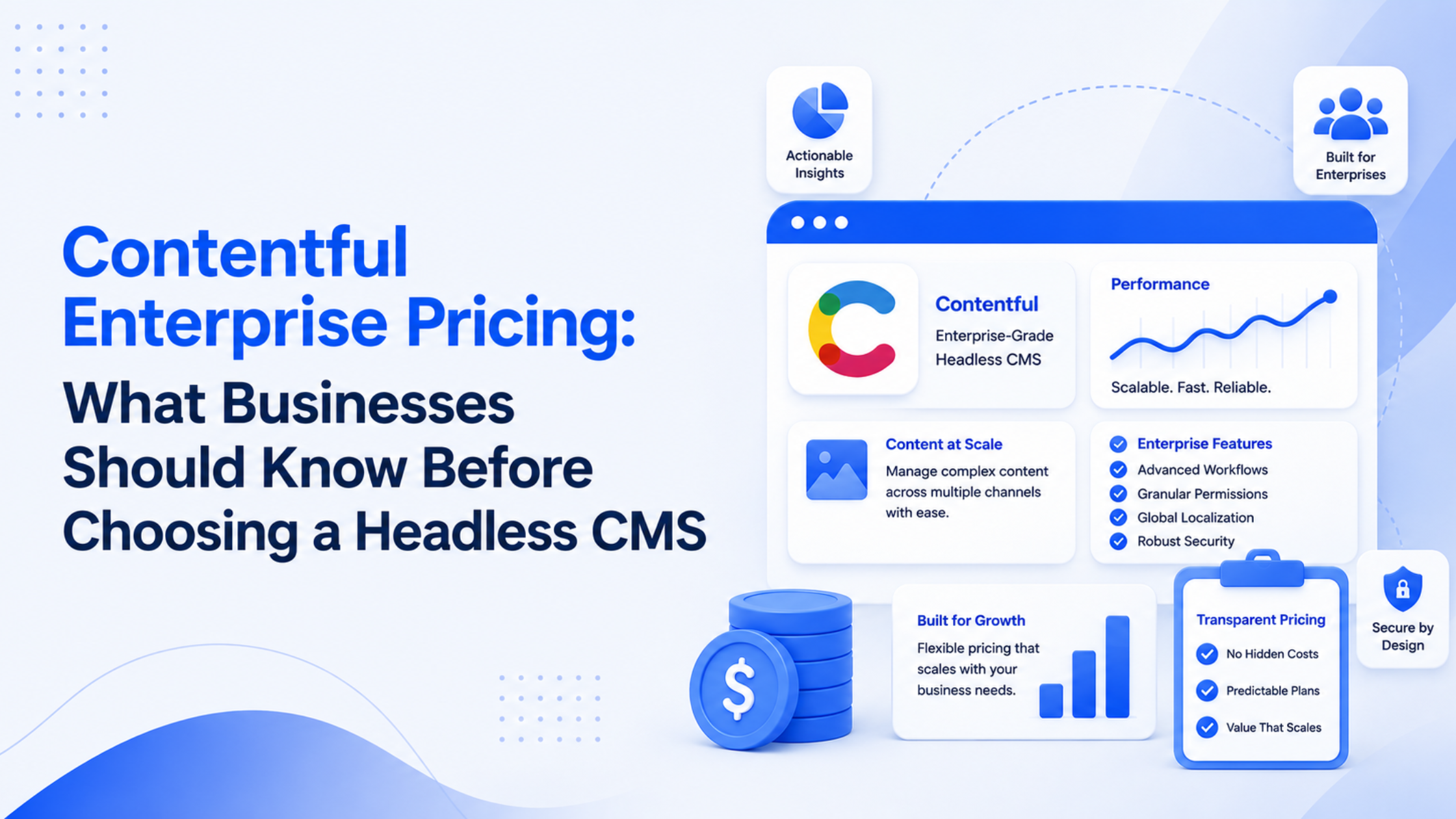
Contentful Enterprise Pricing: What Businesses Should Know

read-timeReading time about 9 mins
Contentful Enterprise Pricing
Reading Time: 9 minutes

Summary: Choosing the right enterprise CMS is both a technical and financial decision. Contentful Enterprise Pricing is customized based on factors such as API usage, users, localization, security, and support requirements, making it different from fixed-price CMS platforms. This guide explains how Contentful’s pricing model works, what influences the overall cost, the enterprise features included, potential hidden expenses, and practical tips for evaluating whether it’s the right fit for your business. By understanding the total cost of ownership and long-term value, organizations can make a more informed investment in their digital content strategy.

Selecting an enterprise Content Management System (CMS) is about far more than choosing the right technology; it’s also a long-term investment decision. Beyond features and functionality, businesses need to understand licensing, implementation costs, scalability, and the overall return on investment before committing to a platform.


Among today’s leading headless CMS platforms, Contentful has become a preferred choice for enterprises looking to deliver content across websites, mobile applications, digital displays, and other connected experiences. Its API-first architecture gives organizations the flexibility to manage content centrally while publishing it across multiple digital channels.


However, one question consistently arises during the evaluation process:


How much does Contentful Enterprise actually cost?


Unlike many SaaS platforms with publicly listed pricing plans, Contentful Enterprise Pricing is customized for every organization. There isn’t a fixed monthly subscription or standard package that fits every business. Instead, pricing is tailored based on several factors, including business size, content volume, API usage, security requirements, localization, and the level of enterprise support required.

This flexible pricing model makes sense for large organizations with unique requirements, but it can also make budgeting more challenging for decision-makers trying to compare enterprise CMS platforms.

In this guide, we’ll explain how Contentful Enterprise Pricing works, the factors that influence overall costs, the enterprise features included in premium plans, and the hidden expenses businesses should plan for before signing a contract. You’ll also discover practical tips for evaluating whether Contentful is the right investment for your organization’s long-term digital strategy.


What Is Contentful?


Before discussing Contentful Enterprise Pricing, it’s important to understand what makes the platform different from traditional content management systems.

Contentful is an API-first CMS designed for modern digital experiences. Unlike conventional CMS platforms that tightly combine content with website templates, Contentful separates content from presentation. This means content is stored independently and delivered through APIs to virtually any digital touchpoint.


Instead of managing separate content for your website, mobile application, customer portal, or digital kiosk, Contentful enables businesses to create content once and distribute it everywhere from a centralized platform.


This approach offers several advantages:


  • Centralized content management
  • Omnichannel publishing
  • Greater development flexibility
  • Easier content reuse
  • Faster digital experiences
  • Better scalability for enterprise businesses


Because of this flexibility, the Contentful CMS has become a popular choice for organizations managing multiple websites, global brands, multilingual content, and complex customer experiences.


For businesses focused on enterprise content management, the platform provides a centralized system that supports collaboration between marketing teams, developers, content creators, and business stakeholders while maintaining consistency across every digital channel.


Why Businesses Choose an API-First CMS


Traditional content management systems are often built primarily for websites. Modern businesses, however, publish content across far more than just web pages.


Today’s customers interact through:


  • Websites
  • Mobile apps
  • Smart devices
  • Customer portals
  • E-commerce platforms
  • Digital displays
  • Voice assistants


An API-first CMS like Contentful makes it possible to manage content from one central location while delivering it wherever customers engage with your brand.

For growing enterprises, this flexibility reduces duplicated work, improves content consistency, and creates a scalable foundation for future digital initiatives.

This is also one of the biggest reasons organizations are willing to invest in Contentful Enterprise Pricing they’re paying not only for a CMS, but for a platform capable of supporting long-term digital growth.


How Contentful Enterprise Pricing Works


One of the biggest differences between Contentful and many other CMS platforms is its pricing approach. Unlike software that offers fixed monthly or annual subscription plans, Contentful Enterprise Pricing is tailored to the unique requirements of each organization.

Rather than selecting a predefined package, businesses work directly with Contentful’s sales team to create a plan based on their operational needs. This customized approach ensures organizations only pay for the capabilities and resources they require while allowing the platform to scale as business demands grow.

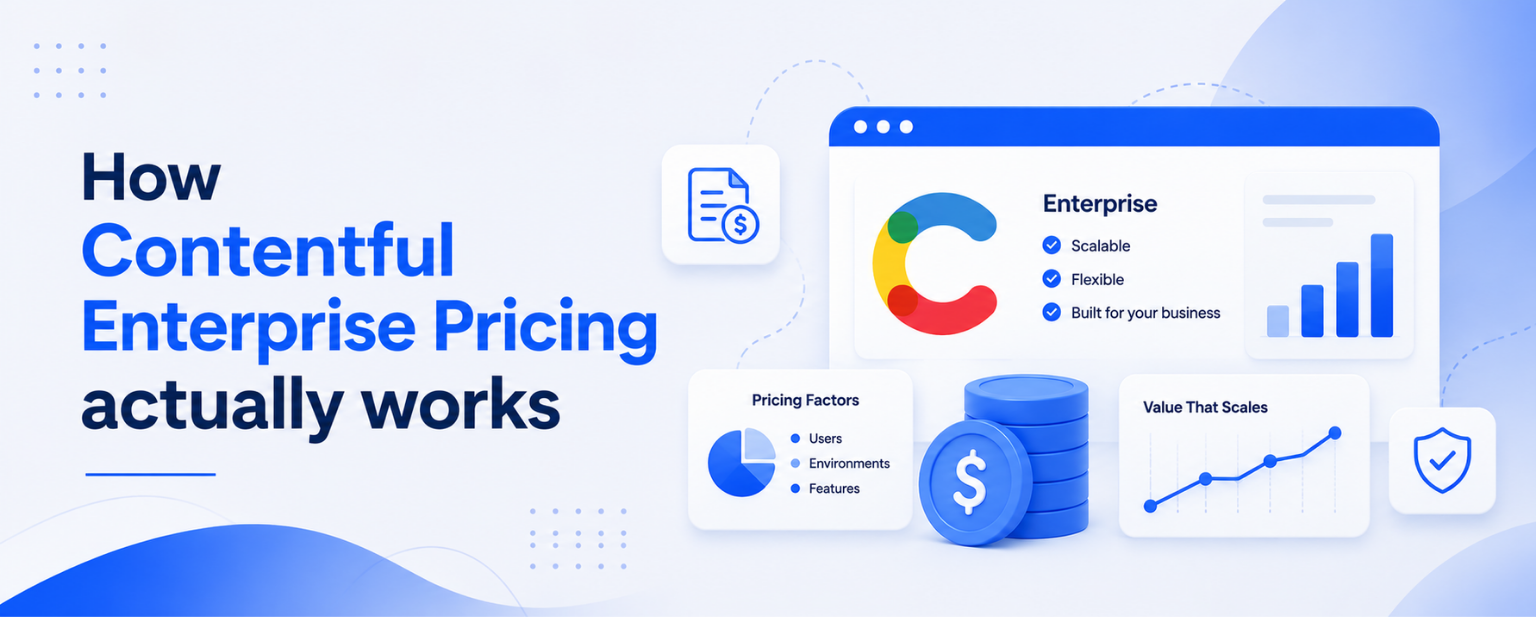
Several factors influence the final enterprise quote, including:


  • Number of users and team members
  • API request volume
  • Number of content spaces and environments
  • Languages and localization requirements
  • Security and compliance needs
  • Support level and service agreements
  • Contract duration


Because every organization has different digital requirements, two companies using the same Contentful CMS may receive very different pricing proposals.


What Does Contentful Enterprise Actually Cost?

Since enterprise pricing isn’t publicly listed, many businesses wonder what they should realistically budget.


Although Contentful doesn’t publish official Enterprise pricing, several procurement platforms and industry reports suggest that organizations typically invest anywhere from tens of thousands to well over one hundred thousand dollars annually, depending on their requirements.


The overall investment varies because no two organizations use the platform in exactly the same way.

Several factors influence Contentful Enterprise Pricing, including:

API Usage

Every piece of content delivered through the platform uses API requests.

Organizations serving millions of visitors, multiple applications, or global audiences naturally generate significantly higher API traffic than smaller businesses.

Higher usage generally results in higher licensing costs.

Team Size

Enterprise plans also consider the number of people accessing the platform.

This may include:

  • Content editors
  • Developers
  • Marketing teams
  • Administrators
  • External contributors
  •  

Larger organizations with multiple departments typically require additional user management and governance capabilities.


Localization Requirements


Many enterprise organizations publish content in several countries and languages.

Managing multilingual content adds complexity and often increases overall pricing because additional locales, workflows, and governance features are required.


For companies focused on global enterprise content management, localization becomes one of the key pricing considerations.

Security and Compliance


Large organizations often require advanced security capabilities beyond standard authentication.

Enterprise customers may need:

  • Single Sign-On (SSO)
  • Identity Provider integration
  • Role-based permissions
  • Audit logs
  • Regulatory compliance
  • Regional data hosting

These enterprise-grade security features contribute to the overall cost while helping businesses meet internal governance and compliance standards.


Features Included in the Enterprise Plan


Although pricing varies, the Enterprise tier typically includes a comprehensive set of capabilities designed for large organizations.

Some of the most valuable enterprise features include:


Advanced User Management

Businesses can define detailed permission levels for different teams, ensuring employees only access the content relevant to their roles.


Enterprise-Level Security

Organizations gain access to advanced authentication methods, security controls, compliance options, and governance features that help protect sensitive business data.


Dedicated Customer Support

Unlike lower-tier plans that rely primarily on documentation or community forums, Enterprise customers generally receive:

  • Dedicated Customer Success Managers
  • Faster response times
  • Priority technical support
  • Service Level Agreements (SLAs)
  • 24/7 assistance for critical issues


Professional Services

Many enterprise organizations also receive access to implementation specialists who assist with migration planning, platform optimization, onboarding, and large-scale deployments.

This support helps businesses reduce implementation risks while accelerating project timelines.


Higher Usage Limits


One of the biggest advantages of Contentful Enterprise Pricing is flexibility.

Enterprise customers receive significantly higher limits for:

  • API requests
  • Content delivery
  • Bandwidth
  • Storage
  • Content environments

These expanded limits allow organizations to support high-traffic websites, mobile applications, and omnichannel digital experiences without constantly worrying about operational constraints.

Why Enterprise Pricing Makes Sense for Large Businesses


At first glance, Enterprise pricing may seem expensive compared to traditional CMS platforms.

However, for organizations managing multiple brands, websites, and digital channels, the investment often delivers value through:

  • Improved content consistency
  • Faster publishing workflows
  • Better collaboration
  • Easier scalability
  • Stronger governance
  • Future-ready digital infrastructure

Instead of viewing Contentful Enterprise Pricing as simply another software expense, many enterprises consider it a long-term investment in their digital operations and customer experience.

Hidden Costs Businesses Should Consider


When evaluating Contentful Enterprise Pricing, it’s important to look beyond the subscription cost. The platform itself is only one part of the total investment. Implementation, maintenance, and ongoing development can all influence your long-term budget.

Understanding these additional expenses upfront helps businesses avoid unexpected costs and plan more effectively.


Content Migration


Migrating content from an existing CMS is rarely a simple copy-and-paste process.

Businesses may need to:

  • Restructure existing content
  • Clean outdated information
  • Build new content models
  • Migrate media assets
  • Test links and content relationships

For organizations with thousands of pages, migration often becomes one of the largest project costs.


Front-End Development


Unlike traditional CMS platforms that include themes and presentation layers, a headless CMS focuses solely on content management.

This means businesses must build and maintain the front end separately using technologies such as:

  • React
  • Next.js
  • Vue.js
  • Angular
  • Gatsby

Although this approach provides greater flexibility and performance, it also requires ongoing development resources.


Integrations

Most enterprise organizations rely on multiple business applications.

Depending on your digital ecosystem, you may need integrations with:

  • CRM platforms
  • Marketing automation software
  • Ecommerce systems
  • Analytics tools
  • Digital Asset Management (DAM) platforms
  • Translation services

Building and maintaining these integrations can increase the overall project investment.


Ongoing Maintenance


Launching a website is only the beginning.

Businesses should also budget for:

  • Platform updates
  • API monitoring
  • Performance optimization
  • Security improvements
  • Feature enhancements
  • Technical support

Regular maintenance helps ensure your Contentful CMS continues to perform efficiently as business requirements evolve.


How to Get Better Value from Contentful Enterprise Pricing


Although Enterprise pricing is customized, businesses have opportunities to negotiate a contract that better aligns with their requirements.

Here are a few practical strategies to maximize value.


Understand Your Actual Usage


Before requesting a quote, estimate your expected:

  • API requests
  • Monthly traffic
  • Number of editors
  • Content environments
  • Localization needs

Providing realistic projections helps prevent paying for resources that may never be used.


Consider a Multi-Year Agreement

Many enterprise software providers offer discounts for longer commitments.

If your organization plans to use Contentful for several years, a multi-year agreement may reduce annual costs while providing pricing stability.


Discuss Overage Charges

Usage-based platforms often include limits for API requests, bandwidth, and storage.

Before signing a contract, clarify:

  • Overage pricing
  • Additional API costs
  • Storage expansion fees
  • Bandwidth limits

Understanding these details early helps eliminate surprises later.


Compare Alternative Platforms

Choosing a CMS shouldn’t be based on price alone.

Compare Contentful Enterprise Pricing alongside other enterprise platforms by evaluating:

  • Features
  • Scalability
  • Security
  • Integration capabilities
  • Support
  • Long-term maintenance costs

Looking beyond the subscription fee gives businesses a clearer picture of total ownership costs.


Contentful vs Traditional CMS

One of the biggest reasons organizations choose Contentful is its flexibility compared to conventional content management systems.

Contentful Enterprise Pricing

For businesses planning long-term digital transformation, an API-first CMS offers greater flexibility for delivering consistent content across multiple platforms.

Is Contentful the Right Choice for Your Business?


While Contentful Enterprise Pricing represents a significant investment, the platform isn’t designed for every organization.

Contentful is an excellent choice if your business:


  • Operates multiple websites or brands
  • Serves customers across different countries and languages
  • Needs omnichannel content delivery
  • Requires enterprise-grade security
  • Has dedicated development resources
  • Plans to scale digital experiences over time


However, smaller businesses with a single marketing website may find that a traditional CMS provides everything they need at a lower cost.

The right decision depends on your current requirements, future growth plans, and available technical resources.


Measuring the Return on Investment (ROI)


When evaluating enterprise software, price should never be the only consideration. The true value lies in how the platform supports business growth and operational efficiency.


Organizations often realize long-term ROI through:


  • Faster content publishing
  • Improved collaboration between teams
  • Consistent omnichannel experiences
  • Reduced manual content duplication
  • Easier scalability for future projects
  • Better governance and compliance


For enterprises managing complex digital ecosystems, these operational benefits can outweigh the initial investment over time.


Ultimately, Contentful Enterprise Pricing should be viewed as part of a broader digital strategy rather than simply a software expense. Choosing the right platform can help businesses improve efficiency, streamline content operations, and create better customer experiences across every digital touchpoint.


Conclusion


Choosing the right enterprise CMS involves more than comparing features it requires understanding how the platform supports your long-term business goals. While Contentful Enterprise Pricing is customized rather than publicly listed, the platform offers the flexibility, scalability, and governance that many growing organizations need to manage content across multiple digital channels.

Before making a decision, businesses should evaluate both the upfront investment and the ongoing costs of implementation, integrations, development, and maintenance. Looking beyond the subscription fee provides a clearer picture of the platform’s total value over time.


For organizations managing multiple brands, global websites, or omnichannel customer experiences, the Contentful CMS can deliver significant operational benefits through centralized content management, improved collaboration, and faster publishing workflows. Its API-first CMS architecture also provides the flexibility to adapt as new channels and technologies emerge.

On the other hand, businesses with simpler content requirements or a single website may find that a traditional CMS better suits their needs and budget. The best choice ultimately depends on your organization’s size, technical capabilities, content strategy, and future growth plans.


Instead of focusing solely on price, evaluate how well the platform aligns with your business objectives, scalability requirements, and expected return on investment. A well-planned CMS investment can improve operational efficiency, strengthen customer experiences, and support sustainable digital growth for years to come.


By understanding how Contentful Enterprise Pricing works, what influences the overall cost, and the value it brings to enterprise content management, businesses can make informed decisions and invest confidently in a platform that supports their long-term digital transformation journey.

Frequently Asked Questions

There’s no fixed price it’s custom and negotiated. Reported enterprise contracts commonly range from the mid-five figures to over $179,000 per year depending on usage, users, and term length.

Enterprise pricing is tailored to each organization’s headcount, API and bandwidth volume, localization, and compliance needs, so Contentful quotes it individually rather than listing a flat rate.

As of 2026: Free ($0), Lite/Basic (around $300/month), and Premium (custom enterprise pricing). The Premium tier absorbed what older plans called Team and Enterprise.

Advanced security (SSO, custom roles, IdP), compliance and data residency support, a dedicated Customer Success Manager, SLA-backed 24/7 support, Professional Services access, and higher usage limits.

The Free plan supports a single space, about 5 users, 2 locales, and roughly 1M API calls/month with community support suitable for prototypes and small projects, but with no overage allowance.

Bandwidth and asset overages, add-on features, extra spaces or environments, content migration, and ongoing front-end development, since a headless CMS leaves the presentation layer to you.

Multi-year agreements (2–3 years) often unlock roughly 15–30% savings compared with annual contracts, and overage rates are frequently negotiable.

Contentful is a headless CMS that stores content as structured data and delivers it via API to any channel, rather than tying content to a single website template like WordPress or Drupal.

Organizations running multiple digital properties, markets, or languages that need omnichannel delivery, strong governance, security, and enterprise-grade support at scale.

Common enterprise headless and hybrid CMS alternatives include Sanity, Strapi, Sitecore, and Adobe Experience Manager worth benchmarking for both features and price.

Your subscription could not be saved. Please try again.
Your subscription has been successful.

Newsletter

Subscribe to our newsletter and stay updated.

Latest from our blog​

Where we share Trending Updates, News, & Thought leadership !

Get in touch

Lets build and scale your digital products. We are always open to discuss new projects, creative ideas or opportunities to be part of your vision.