Healthcare organizations are experiencing a fundamental shift in how their digital presence functions within the broader enterprise.
A decade ago, a healthcare website primarily served informational purposes listing services, providing contact details, and hosting physician profiles. It supported branding and patient awareness but rarely influenced operational workflows.
Today, that same digital platform is expected to manage appointment systems, integrate with Electronic Health Records (EHR), support patient portals, handle secure data submissions, power marketing automation, and maintain strict compliance standards.
The expectations have evolved quietly, but the impact is significant.
The healthcare website is no longer a communication tool. It is becoming digital infrastructure.
This transformation requires a different level of architectural thinking — one that goes beyond standard development. It requires Enterprise WordPress implemented with strategic foresight.
Understanding the Shift: From Website to Digital Infrastructure
The phrase Website to Digital Infrastructure represents more than a technical upgrade. It reflects a change in how healthcare organizations must think about their digital assets.
A website is typically:
- Content-driven
- Marketing-led
- Design-focused
- Standalone
Digital infrastructure, by contrast, is:
- System-integrated
- Security-driven
- Performance-engineered
- Operationally critical
Healthcare organizations increasingly depend on digital systems for patient acquisition, communication, coordination, and compliance. When systems become essential to daily operations, they must meet infrastructure-level standards.
This is where Enterprise WordPress plays a strategic role.
What Enterprise WordPress Means in Healthcare
Enterprise WordPress does not simply refer to a large website with more pages. It refers to a structured implementation designed to support enterprise-grade requirements.
In healthcare, those requirements often include:
- Secure hosting architecture
- Encrypted data handling
- Role-based access management
- Multi-location governance
- API integration with clinical systems
- Performance optimization under variable traffic loads
- Ongoing monitoring and DevOps support
The difference lies not in the content management system itself, but in how it is engineered, deployed, and maintained.
Standard WordPress installations focus on functionality and speed of launch. Enterprise WordPress focuses on sustainability, security, and scalability over time.
Security as a Foundational Requirement
Security concerns in healthcare extend beyond basic protection against cyber threats.
Healthcare organizations must address:
- Patient confidentiality
- Data transmission security
- System access controls
- Audit readiness
- Infrastructure resilience
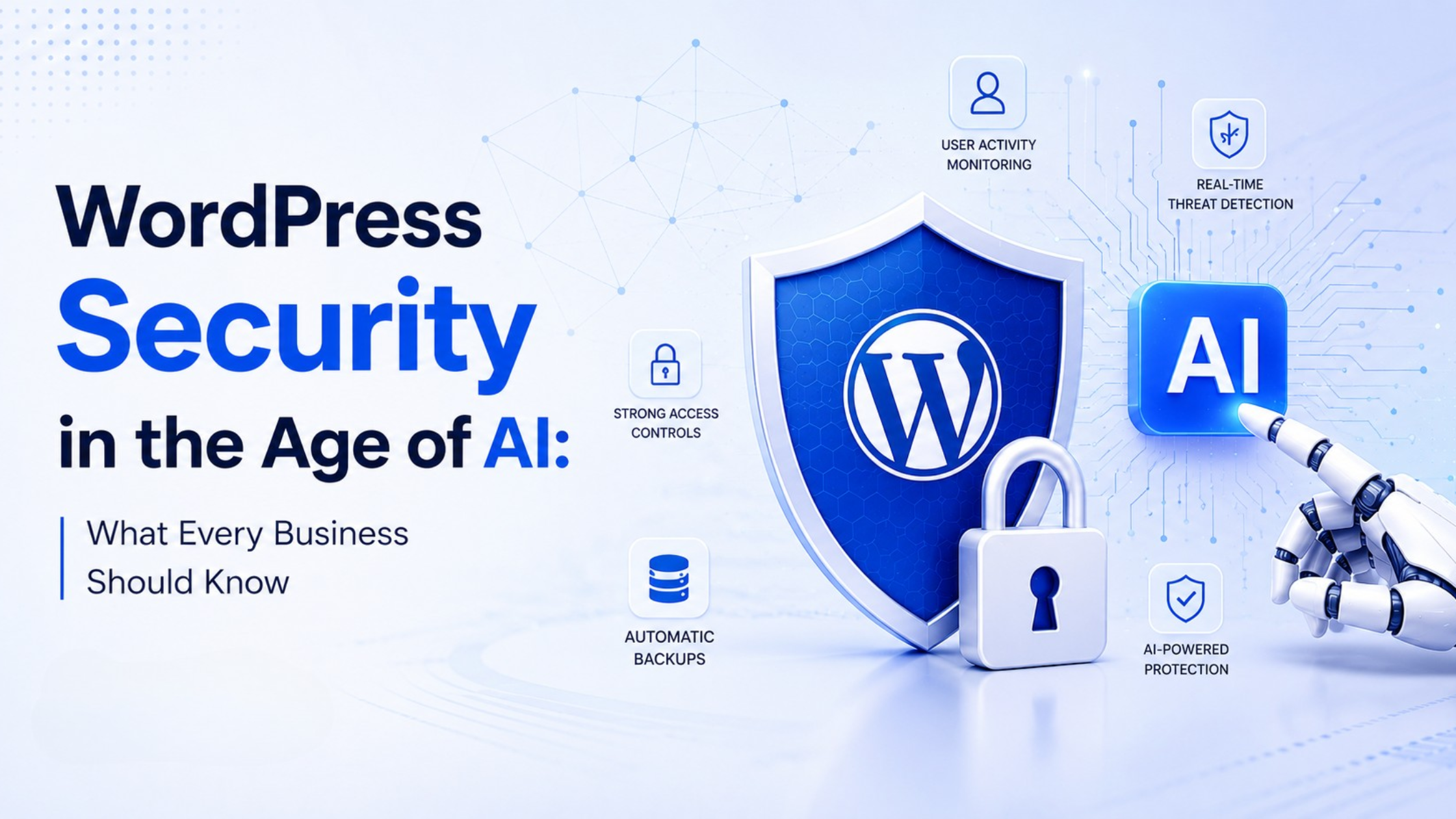
While WordPress can be configured securely, WordPress for Healthcare must be implemented within an enterprise-grade environment.
This includes:
- Secure cloud hosting
- Web application firewalls
- Intrusion detection systems
- Continuous vulnerability scanning
- Controlled administrative permissions
- Regular security audits
Security is not an add-on. It is embedded into infrastructure decisions from the beginning.
In an enterprise healthcare environment, security failures carry reputational, financial, and regulatory consequences. Enterprise WordPress mitigates those risks through architectural planning rather than reactive patching.
Scalability Beyond Growth in Traffic
Scalability is often misunderstood as the ability to handle more visitors. In healthcare, scalability has broader implications.
Organizations may expand by:
- Opening new locations
- Adding new specialties
- Launching telehealth services
- Introducing patient engagement tools
- Increasing digital marketing initiatives
Each expansion introduces technical complexity.
A basic website structure may require constant redevelopment to support these changes. Enterprise WordPress, however, is built with modular architecture that accommodates expansion without structural disruption.
Scalability becomes proactive rather than reactive.
The move from Website to Digital Infrastructure ensures that growth does not create instability.
Integration with Clinical and Operational Systems
Healthcare ecosystems rely on multiple interconnected systems:
- Electronic Health Records (EHR)
- Customer Relationship Management (CRM) systems
- Insurance verification tools
- Telemedicine platforms
- Analytics and reporting dashboards
When digital platforms operate independently of these systems, inefficiencies arise. Manual processes increase. Data becomes fragmented. Decision-making slows down.
Enterprise implementations of WordPress for Healthcare prioritize API-based integrations. Structured data exchange ensures that systems communicate seamlessly.
For example:
- Appointment requests can sync directly with scheduling software.
- Marketing data can integrate with CRM systems.
- Patient inquiries can route securely to appropriate departments.
This connectivity defines digital infrastructure.
Performance and Reliability in Critical Environments
Healthcare platforms often experience unpredictable traffic patterns. Public health announcements, seasonal outbreaks, media exposure, or marketing campaigns can create sudden demand spikes.
Downtime in healthcare digital systems affects more than user experience. It affects trust.
Enterprise WordPress environments typically incorporate:
- Cloud-based hosting for elasticity
- Content Delivery Networks (CDNs)
- Database optimization
- Load balancing
- Automated performance monitoring
Reliability becomes a baseline expectation rather than a best-case scenario.
Performance engineering ensures that patient-facing systems remain accessible when they are needed most.
Governance Across Multi-Location Networks
Many healthcare organizations operate across multiple cities or states. Maintaining brand consistency and operational governance across these networks requires structured digital management.
Enterprise WordPress supports:
- Multi-site architecture
- Centralized brand control
- Localized content flexibility
- Structured publishing workflows
- Permission-based content management
This governance model prevents fragmentation while empowering local teams.
Without enterprise-level architecture, digital ecosystems become difficult to manage as organizations grow.
The Role of DevOps and Continuous Support

Healthcare technology cannot remain static.
Security updates, performance improvements, feature enhancements, and system integrations require continuous management.
Enterprise WordPress environments often include:
- Continuous deployment pipelines
- Automated backups
- Version control
- Real-time monitoring
- Ongoing optimization
This operational layer ensures stability over time.
In contrast, standard website builds often depend on periodic updates without structured monitoring.
Healthcare organizations require digital environments that evolve responsibly not reactively.
Preparing for Emerging Technologies
Healthcare innovation continues to accelerate. Organizations are integrating:
- Artificial intelligence for scheduling and diagnostics
- Automated patient communication workflows
- Predictive analytics
- Telehealth expansion
- Personalized patient portals
Without integrated architecture, incorporating these innovations can require major redevelopment.
Enterprise WordPress provides structural flexibility. New tools can connect via APIs and modular extensions without disrupting core systems.
Future-readiness is not achieved through isolated upgrades. It is achieved through infrastructure-level planning.
Reframing WordPress in the Enterprise Healthcare Context
WordPress remains widely adopted globally because of its flexibility and ecosystem.
However, its role within healthcare enterprises is evolving.
When implemented as Enterprise WordPress, the platform supports:
- Secure content governance
- Integrated system connectivity
- High-performance delivery
- Scalable growth
- Operational resilience
The distinction lies in execution.
A standard website serves marketing needs. Enterprise WordPress serves organizational needs.
Strategic Implications for Healthcare Leadership
Digital decisions increasingly influence long-term healthcare strategy.
Infrastructure investments impact:
- Patient acquisition and retention
- Operational efficiency
- Compliance management
- Brand credibility
- Expansion readiness
Healthcare leaders evaluating digital transformation initiatives must assess whether their current website architecture supports enterprise-level demands.
If the digital environment cannot integrate, scale, and secure data effectively, it may not function as true infrastructure.
The transition from Website to Digital Infrastructure represents strategic modernization rather than aesthetic redesign.
Infrastructure Defines Digital Stability
Healthcare organizations operate in a complex regulatory and operational environment.
Healthcare organizations are increasingly dependent on digital systems that must operate with the reliability of infrastructure, not the fragility of traditional websites.
As digital complexity grows, architectural decisions become strategic decisions.
Enterprise WordPress offers a framework capable of supporting secure integrations, scalable expansion, and operational stability when implemented with the right engineering foundation.
For healthcare leaders evaluating whether their current digital environment can sustain long-term growth, it may be worth assessing whether the platform functions as a true digital infrastructure or simply as a website.
A structured review of architecture, security posture, and system integrations can often clarify the next step forward.