Your website plays a vital role in how customers discover, trust, and interact with your business. As your organization grows, so do the demands on your website from managing larger volumes of content and supporting multiple languages to ensuring strong security and seamless performance. Choosing the right content management system (CMS) becomes essential for delivering consistent digital experiences and supporting long-term business growth.
TYPO3 is built to meet these evolving needs. As a powerful open-source enterprise CMS, it offers the flexibility, scalability, and advanced features required to manage complex websites with confidence. Whether you’re expanding into new markets, managing multiple websites, or streamlining content management across different teams, TYPO3 provides a reliable foundation for sustainable digital success.
Unlike many content management systems that rely heavily on third-party plugins to support advanced functionality, TYPO3 is designed with enterprise requirements in mind. It includes robust features such as multilingual content management, role-based access control, workflow automation, scalability, and strong security capabilities. This enables organizations to efficiently manage their digital presence while adapting to changing business needs.
From multinational enterprises and government organizations to educational institutions and global brands, TYPO3 has become a trusted choice for businesses that require stability, customization, and long-term reliability. Its flexible architecture allows organizations to build tailored digital experiences without sacrificing performance or security.
In this blog, we’ll explore what TYPO3 is, its standout features, the benefits it offers businesses, and why it continues to be one of the most trusted enterprise content management systems for building secure, scalable, and future-ready websites.
What Is TYPO3?
TYPO3 is a free, open-source Content Management System (CMS) developed specifically for organizations that require more than basic website management. While many CMS platforms are ideal for blogs or small business websites, TYPO3 is designed to support enterprise-level projects with advanced functionality, enhanced security, and exceptional scalability.
Originally launched in 1998, TYPO3 has evolved into one of the world’s leading enterprise CMS platforms. It is backed by a global community of developers and contributors who continuously improve the platform, release updates, and maintain high security standards. Its Long-Term Support (LTS) versions ensure organizations receive regular security patches and stability updates for several years, making it a dependable solution for long-term digital projects.
What makes TYPO3 unique is its ability to manage complex digital ecosystems. Businesses can operate multiple websites, support numerous languages, assign detailed user permissions, and integrate with third-party applications all from a single platform. This centralized approach simplifies website management while improving collaboration across departments and teams.
TYPO3 is also highly flexible. Its modular architecture allows developers to create custom functionalities and integrate business-specific features without affecting the stability of the core system. As a result, organizations can tailor the platform to meet their unique operational needs while maintaining excellent performance.
For businesses that anticipate future growth, TYPO3 provides the scalability needed to expand without migrating to another CMS. Whether your organization is launching new regional websites, adding eCommerce functionality, or integrating customer relationship management (CRM) systems, TYPO3 offers the flexibility to evolve alongside your business.
Key Features of TYPO3
Enterprise-Level Security
Security is one of the primary reasons organizations choose TYPO3. Enterprise websites often handle sensitive customer information, internal documents, and business-critical data, making robust security essential.
TYPO3 is developed with security as a priority. The platform benefits from a dedicated security team that regularly monitors vulnerabilities, releases security patches, and ensures compliance with modern web security standards. Features such as secure authentication, role-based permissions, and regular Long-Term Support updates help protect websites against common cyber threats.
This makes TYPO3 a preferred choice for industries where security and compliance are non-negotiable, including government agencies, healthcare organizations, and financial institutions.
Excellent Scalability
As businesses expand, their websites must accommodate increasing traffic, additional content, and new digital services. TYPO3 is built to scale efficiently, allowing organizations to grow without compromising website performance.
Whether you’re managing thousands of pages, multiple websites, or high volumes of daily visitors, TYPO3 maintains reliability through its flexible architecture and optimized performance capabilities.
Its scalability makes it suitable for businesses planning long-term digital growth rather than short-term website projects.
Built-In Multilingual Support
Reaching global audiences requires more than simply translating website content. Businesses need a structured way to manage localized information while maintaining consistency across regions.
TYPO3 provides native multilingual support, allowing administrators to create, edit, and manage content in multiple languages from a single dashboard. This eliminates the need for additional translation plugins while simplifying content management for international organizations.
Companies expanding into new markets can efficiently maintain regional websites without duplicating administrative efforts.
Advanced User Roles and Permissions
Large organizations often have multiple teams responsible for creating, reviewing, and publishing website content. TYPO3 offers highly customizable user roles and permission settings that enable administrators to define exactly what each team member can access.
For example, content writers can draft articles, editors can review them, and managers can approve publication all within a structured workflow. This reduces errors, improves accountability, and ensures only authorized users can modify sensitive website content.
Multi-Site Management
Many enterprises manage separate websites for different countries, brands, or business units. TYPO3 allows administrators to manage multiple websites from a single installation, significantly reducing maintenance efforts.
Instead of maintaining separate CMS platforms for each website, organizations can centralize updates, user management, and content operations while preserving each website’s unique branding and functionality.
This not only improves operational efficiency but also reduces long-term maintenance costs.
Flexible Extension Framework
Every business has unique requirements, and TYPO3’s extension framework makes it possible to customize the platform accordingly.
Developers can integrate CRM systems, ERP platforms, marketing automation tools, payment gateways, analytics solutions, and other third-party applications to create tailored digital experiences.
Because TYPO3 is highly extensible, organizations are not limited by the platform’s default capabilities.
Efficient Content Workflows
Managing content across multiple departments can become challenging without structured approval processes.
TYPO3 includes workflow management features that help organizations maintain consistency and quality throughout the publishing process. Content can move through different approval stages before going live, ensuring brand guidelines and compliance requirements are met.
These workflows improve collaboration while minimizing publishing errors.
Exceptional Performance
Website speed directly impacts user experience, SEO rankings, and conversion rates.
TYPO3 includes advanced caching mechanisms, optimized database handling, and flexible performance optimization options that help websites load quickly, even under heavy traffic.
A fast-performing website not only improves visitor satisfaction but also supports stronger search engine visibility and business outcomes.
Benefits of TYPO3 for Businesses
Selecting the right content management system is more than a technical decision—it’s a strategic investment in your organization’s digital future. As businesses expand their online presence, they need a CMS that can support evolving requirements without compromising performance, security, or user experience. TYPO3 is designed to meet these expectations, making it a preferred choice for organizations seeking long-term value.
Supports Long-Term Business Growth
Business needs rarely remain the same. New products, expanding markets, additional websites, and evolving customer expectations all demand a platform that can adapt without requiring a complete rebuild.
TYPO3 is built with scalability at its core. Whether you’re launching a new regional website, introducing additional languages, or integrating new business applications, TYPO3 provides the flexibility to grow alongside your organization. This reduces the need for costly migrations and ensures your website remains capable of supporting future business goals.
Enhances Content Management Efficiency
Managing large volumes of content can quickly become challenging, especially for organizations with multiple departments or distributed teams. TYPO3 simplifies this process through an intuitive backend, customizable workflows, and centralized content management.
Teams can collaborate efficiently while maintaining complete control over approvals, revisions, and publishing schedules. This structured approach reduces manual effort, minimizes errors, and ensures content remains accurate and consistent across all digital channels.
Strengthens Website Security
Cybersecurity has become a top priority for organizations of every size. A single security vulnerability can lead to data breaches, financial losses, and reputational damage.
TYPO3 addresses these concerns with enterprise-grade security features, regular updates, and a dedicated security team that actively monitors vulnerabilities. Combined with role-based permissions and secure authentication, businesses gain confidence that their digital assets remain protected against emerging threats.
Reduces Operational Costs
Although enterprise CMS platforms may appear to require a higher initial investment, they often deliver significant long-term savings.
TYPO3’s ability to manage multiple websites from a single installation reduces maintenance complexity, while its open-source nature eliminates expensive licensing fees. Businesses can also customize the platform according to their requirements without being locked into proprietary solutions, resulting in greater flexibility and lower total cost of ownership.
Delivers a Better User Experience
Website visitors expect fast loading times, intuitive navigation, and consistent experiences across all devices. TYPO3 provides the tools needed to deliver these expectations through responsive design support, efficient content delivery, and optimized performance.
A well-structured TYPO3 website not only improves user satisfaction but also encourages longer visits, higher engagement, and increased conversions.
Simplifies Integration with Business Systems
Modern organizations rely on a variety of software solutions, including CRM platforms, ERP systems, marketing automation tools, analytics platforms, and customer support software.
TYPO3’s flexible architecture allows seamless integration with these systems, enabling businesses to automate workflows, synchronize data, and improve operational efficiency. This connected ecosystem helps organizations streamline processes while delivering personalized customer experiences.
Industries That Benefit from TYPO3
One of TYPO3’s greatest strengths is its versatility. It can be customized to meet the needs of organizations across a wide range of industries, making it an ideal CMS for businesses with complex digital requirements.
Large Enterprises
Large organizations often manage multiple brands, regional websites, and extensive content libraries. TYPO3 provides centralized management, advanced user permissions, and scalability that simplify enterprise website administration while maintaining consistency across digital properties.
Government Organizations
Government websites require high security, accessibility compliance, multilingual support, and reliable performance. TYPO3’s enterprise-grade security and robust content management capabilities make it a trusted solution for public sector organizations.
Educational Institutions
Universities, colleges, and schools frequently manage multiple departments, faculty websites, student portals, and event calendars. TYPO3 enables educational institutions to organize and update large volumes of information efficiently while supporting thousands of users.
Healthcare Providers
Hospitals, healthcare networks, and medical organizations require secure websites that comply with strict regulatory standards. TYPO3 offers advanced security features, role-based access, and scalable infrastructure that support healthcare organizations in delivering trusted digital experiences.
Financial Services
Banks, insurance providers, and financial institutions must protect sensitive customer information while maintaining reliable online services. TYPO3’s strong security framework and flexible integration capabilities make it well-suited for managing secure financial websites.
Manufacturing Companies
Manufacturers often require multilingual product catalogs, distributor portals, technical documentation, and regional websites. TYPO3 simplifies the management of these resources while ensuring consistent branding across international markets.
Non-Profit Organizations
Non-profit organizations can use TYPO3 to manage fundraising campaigns, volunteer portals, event information, and donor communications. Its scalability ensures the platform continues supporting organizational growth without unnecessary complexity.
Why Enterprises Prefer TYPO3 Over Traditional CMS Platforms
Many businesses initially choose a CMS based on immediate requirements. However, as organizations grow, they often discover limitations related to scalability, security, workflow management, and customization.
TYPO3 addresses these challenges by offering enterprise-ready functionality from the start. Instead of relying heavily on third-party plugins to add essential features, TYPO3 includes many advanced capabilities within its core platform. This results in improved stability, fewer compatibility issues, and easier long-term maintenance.
Its ability to manage multiple websites, support global audiences, handle complex user permissions, and integrate with business applications makes TYPO3 a practical solution for organizations seeking a future-ready content management system.
Businesses that prioritize reliability, security, and long-term digital transformation often choose TYPO3 because it provides the flexibility needed to evolve with changing market demands.
TYPO3 vs WordPress vs Drupal: Which CMS Is Right for Your Business?
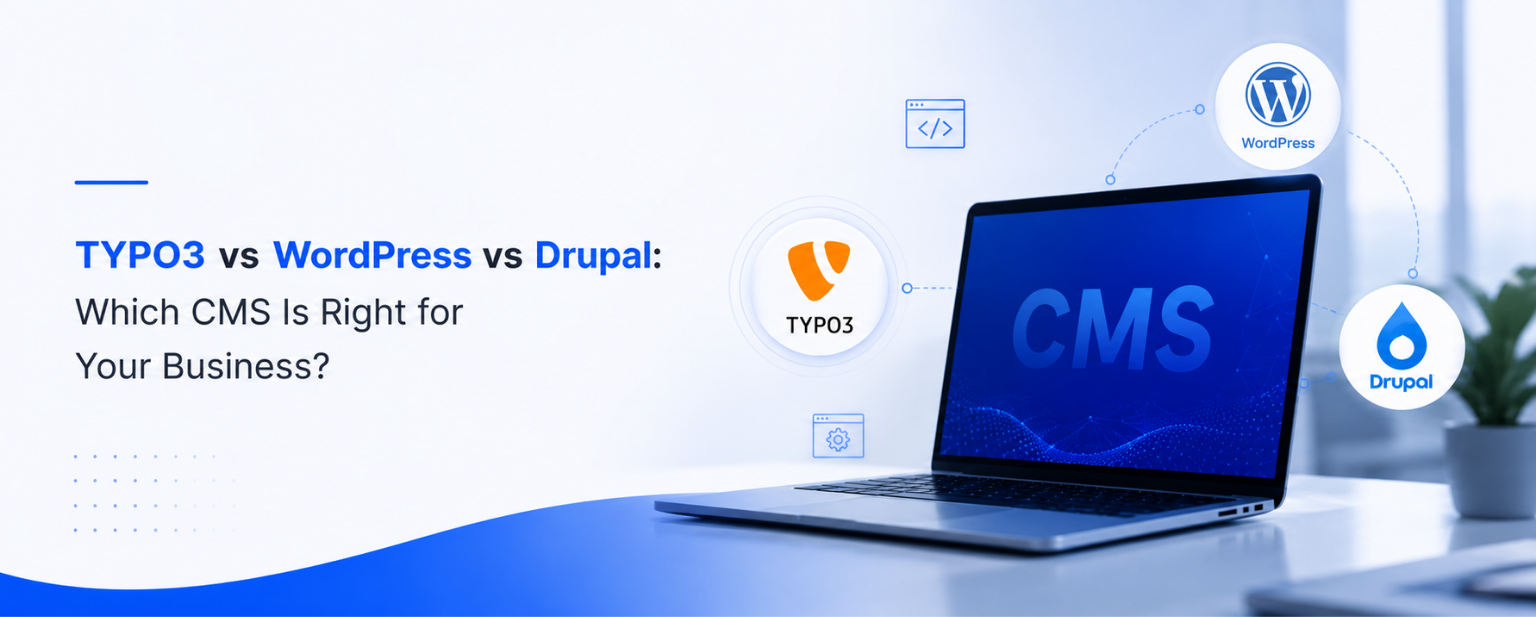
Choosing the right Content Management System (CMS) depends on your organization’s goals, technical requirements, and long-term growth strategy. While WordPress, Drupal, and TYPO3 are all popular open-source platforms, each is designed to serve different types of users and projects.
TYPO3
TYPO3 is built specifically for enterprise-level websites that require scalability, advanced security, multilingual capabilities, and complex content management. It is ideal for organizations managing multiple websites, large teams, and high volumes of content. Its robust architecture and built-in enterprise features make it a preferred choice for businesses planning long-term digital growth.
WordPress
WordPress is the world’s most widely used CMS, known for its user-friendly interface and extensive plugin ecosystem. It is an excellent option for blogs, small business websites, portfolios, and standard corporate websites. While WordPress can be extended to support larger projects, enterprise-level functionality often depends on third-party plugins, which may increase maintenance and security considerations over time.
Drupal
Drupal is another powerful open-source CMS recognized for its flexibility and strong security. It is commonly used for complex websites, government portals, and educational institutions. However, Drupal typically has a steeper learning curve and often requires experienced developers to build and maintain advanced functionality.
SEO Benefits of TYPO3
A visually appealing website is only valuable if potential customers can find it. Search engine optimization (SEO) plays a crucial role in increasing online visibility, attracting qualified traffic, and generating business opportunities. TYPO3 includes several features that support modern SEO best practices, making it an excellent choice for organizations focused on improving their search engine performance.
Search Engine-Friendly URLs
TYPO3 enables businesses to create clean, descriptive, and user-friendly URLs that improve both search engine crawling and user experience. Well-structured URLs help visitors understand page content while contributing to better search rankings.
Complete Metadata Management
Optimizing title tags and meta descriptions is essential for improving click-through rates from search engine results pages. TYPO3 allows administrators to manage SEO metadata for individual pages, giving businesses greater control over how their content appears in search results.
XML Sitemap Generation
Search engines rely on XML sitemaps to discover and index website content efficiently. TYPO3 supports automatic sitemap generation, helping search engines identify important pages and keep indexed content up to date.
Canonical URL Support
Duplicate content can negatively affect search engine rankings. TYPO3 provides canonical URL functionality, ensuring search engines recognize the preferred version of each page and reducing the risk of duplicate content issues.
Mobile-Responsive Websites
With mobile devices accounting for a significant portion of internet traffic, responsive design has become essential. TYPO3 supports responsive website development, allowing businesses to deliver a consistent experience across desktops, tablets, and smartphones.
Fast Website Performance
Website speed influences both user satisfaction and SEO rankings. TYPO3 includes advanced caching and performance optimization features that help reduce loading times and improve Core Web Vitals, contributing to better search engine visibility.
Structured Data Support
TYPO3 can be configured to implement structured data (Schema Markup), helping search engines better understand website content. This increases the likelihood of earning rich search results such as FAQs, reviews, and business information.
Flexible SEO Extensions
Businesses with advanced SEO requirements can extend TYPO3’s capabilities through trusted extensions, allowing greater customization for technical SEO, analytics, redirects, and performance optimization.
Best Practices for TYPO3 Development
Building a successful TYPO3 website involves more than selecting the right CMS. Following development best practices ensures your website remains secure, scalable, and easy to maintain over time.
Keep TYPO3 Updated
Regularly updating TYPO3 ensures access to the latest security patches, performance improvements, and new features. Using Long-Term Support (LTS) versions provides a stable environment while reducing compatibility issues.
Choose Reliable Extensions
Extensions add valuable functionality, but using unnecessary or outdated extensions can impact performance and security. Install only trusted, actively maintained extensions that align with your business requirements.
Optimize Website Performance
A fast website improves user experience and supports higher search engine rankings. Developers should implement caching, optimize images, compress assets, and minimize unnecessary scripts to maximize website performance.
Implement Strong Security Measures
Security should be integrated throughout the development process. Use strong authentication methods, assign appropriate user permissions, enable HTTPS, and conduct regular security audits to protect sensitive business data.
Design for Scalability
Your website should be capable of supporting future growth. Building scalable architectures, organizing content effectively, and planning for future integrations reduce redevelopment costs as your business expands.
Prioritize Accessibility
An accessible website ensures users of all abilities can navigate and interact with your content. Following recognized accessibility standards improves usability while helping organizations meet legal and regulatory requirements.
Regularly Monitor Website Performance
Continuous monitoring helps identify technical issues before they affect users. Businesses should review website speed, uptime, security logs, and SEO performance regularly to maintain optimal functionality.
Partner with Experienced TYPO3 Developers
TYPO3 offers extensive flexibility, but unlocking its full potential requires technical expertise. Working with experienced TYPO3 developers ensures your website is built according to best practices, optimized for performance, and aligned with your business goals.
Conclusion
As organizations continue to expand their digital presence, selecting a content management system that can support future growth has become increasingly important. Businesses require a platform that not only manages content efficiently but also provides the flexibility, security, and scalability needed to adapt to changing customer expectations and evolving technologies.
TYPO3 stands out as one of the most powerful enterprise content management systems available today. Its advanced security features, built-in multilingual capabilities, flexible architecture, and ability to manage complex websites make it an excellent choice for organizations looking beyond basic website management.
Unlike many traditional CMS platforms, TYPO3 is designed to handle enterprise-level requirements without compromising performance or reliability. From managing multiple websites and supporting global audiences to integrating with business applications and maintaining strong security standards, it provides everything organizations need to build a future-ready digital ecosystem.
If your business is planning a new enterprise website, modernizing an existing platform, or looking for a CMS that can scale alongside your growth, TYPO3 is a solution worth considering. Combined with the expertise of an experienced development partner, it can help you create secure, engaging, and high-performing digital experiences that support your business objectives for years to come.
Ready to build a secure and scalable TYPO3 website? Connect with the team at Diginnovators to discuss your project and discover how our TYPO3 development expertise can help accelerate your digital transformation.
Frequently Asked Questions